Nobody's Clapping and You Still Show Up: The Quiet Habit That Builds Real Careers
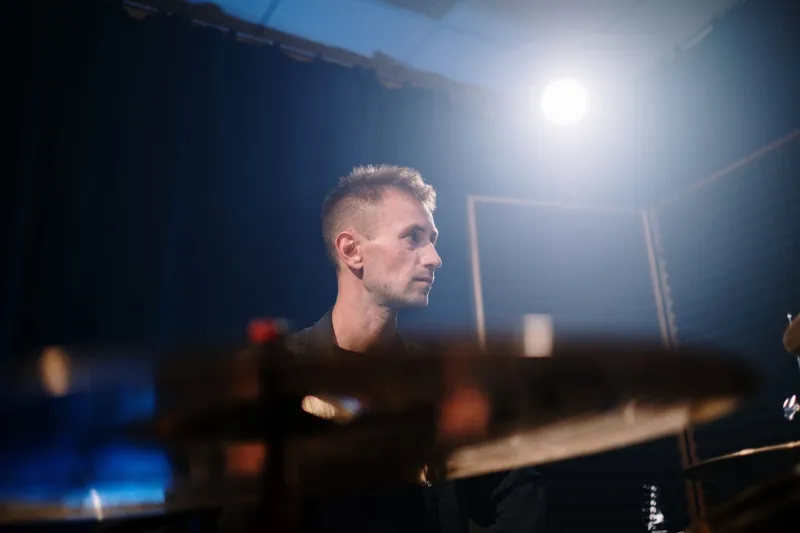
Let me paint you a picture that nobody puts on their Instagram story.
It's a Tuesday afternoon. No gig tonight. No callback pending. Your last post got twelve likes, one of which was your mom. You sit down at the piano, or open the voice memo app, or pull up the script you've been half-drafting for three weeks — and you just... work. No audience. No algorithm reward. No one to tell you it was good.
That moment? That's the whole career, right there.
We spend so much time talking about the breakthrough — the viral clip, the standing ovation, the booking that changes everything — that we've kind of lost the plot on what actually produces those moments. Spoiler: it's not hustle culture motivation content. It's the boring, repetitive, invisible work you do when absolutely nobody is watching.
The Visibility Trap Nobody Warns You About
Here's something the content creator economy doesn't want you to figure out: constant visibility and genuine creative depth are often pulling in opposite directions.
When your entire workflow is organized around producing content for an audience — every rehearsal a potential reel, every rough idea a possible post — you start optimizing for reaction instead of craft. You stop experimenting with things that might fail. You stop sitting with discomfort long enough to find something real inside it. The work gets shallower because the feedback loop is too fast and too public.
The entertainers who last — and I mean really last, the ones still doing meaningful work ten, fifteen, twenty years in — almost universally talk about some version of private practice that has nothing to do with output. A songwriter who writes three songs a week that nobody will ever hear. A comedian who works out material in a half-empty bar in a city they're just passing through. An actor who reads plays out loud alone in their apartment just to feel language in their mouth.
That's not wasted time. That's where the depth lives.
What "Consistency" Actually Means (Hint: It's Not Posting Every Day)
The word consistency has been so thoroughly hijacked by social media advice that it barely means anything anymore. "Be consistent" has become shorthand for "post on a schedule" — which is fine as a distribution strategy but has almost nothing to do with the consistency that builds real skill.
The consistency that matters is the kind you maintain when the motivation runs dry. When you're between projects. When the last thing you made didn't land the way you hoped. When you're tired and uninspired and the work feels mechanical.
Professional athletes have understood this forever. You don't see an NBA player decide to skip free throw practice because they're not "feeling it" that day. The repetition is the point. The muscle memory gets built in the boring sessions, not the highlight reel ones. Creative work operates on the same principle, even though we like to romanticize it as something more mystical.
Showing up daily — or near-daily — to do small, low-stakes creative work builds something that no amount of inspired bursts can replicate: a baseline. A floor. A level of craft you can access even on your worst day because you've drilled it into your bones.
Small Experiments Are Doing More Work Than You Think
One of the best things about working when no one's watching is that you can afford to be genuinely bad at things. You can try the weird idea. You can follow the thread that probably goes nowhere. You can make the thing that doesn't fit your brand, your genre, or anyone's current expectations.
Some of those experiments will be garbage. Most of them, honestly. But a handful will crack something open — a new approach, an unexpected direction, a creative solution you never would have found if you'd been playing to the room.
Think about the musicians who spent years messing around in home studios before anyone cared. Or the comedians who spent a decade doing bits in front of twelve people before one of those bits became the centerpiece of a Netflix special. The quiet experimentation phase isn't the warm-up. It's the R&D department.
You don't get the breakthrough without the lab work. And the lab only functions when the pressure of performance is off.
Refinement Is Invisible Until It Suddenly Isn't
Here's something that confuses people when they watch a seasoned performer work: it looks effortless. Natural. Like they were just born with it. What they're not seeing is the ten thousand small refinements that happened in private over years.
The timing that feels instinctive got that way because someone practiced it until it stopped feeling like a choice. The emotional authenticity that reads as raw and unfiltered was actually carefully cultivated through hours of private work — trying things, noticing what felt false, adjusting, trying again.
Refinement is almost never visible in real time. It accumulates quietly, and then one day someone watches you perform and says you seem different, sharper, more you than before. And you know it's because of all those Tuesday afternoons when nobody was clapping.
How to Protect Your Private Practice in a World That Wants Everything Documented
This is the practical part, because knowing this matters and actually living it are two different things when you've got a phone in your pocket and a follower count that ticks up every time you share something.
First, make some of your work genuinely private. Not "posted later" private — actually just for you. Notebooks that don't become threads. Recordings that don't become content. Rehearsals that don't get filmed. Create a space that belongs entirely to the work.
Second, schedule your invisible time the same way you schedule everything else. Treat it with the same respect as a paid gig, because in a very real sense it's paying you forward. Two hours on Wednesday morning. Thirty minutes before bed. Whatever fits your life — but protect it.
Third, resist the urge to measure it. You don't need a streak tracker or a journal prompt about what you learned today. Sometimes the most productive creative sessions are the ones that feel like nothing happened, because you were just quietly ingraining something that won't show up until six months from now.
The Long Game Is the Only Game Worth Playing
One-hit wonders exist in every corner of entertainment. They're not failures, necessarily — sometimes one great moment is exactly what someone set out to create. But if you're reading this, I'm guessing you're after something longer than that. A body of work. A career with range. A creative life that still has somewhere interesting to go ten years from now.
That kind of longevity doesn't come from chasing visibility. It comes from the quiet, unglamorous, deeply unfashionable practice of showing up and doing the work when nobody's watching.
The audience will find the breakthroughs. But you have to build them first, alone, in the boring in-between.
That's not the unsexy part of the job. That is the job.