Less Is Louder: The Art of Knowing When to Shut Up and Let the Moment Breathe
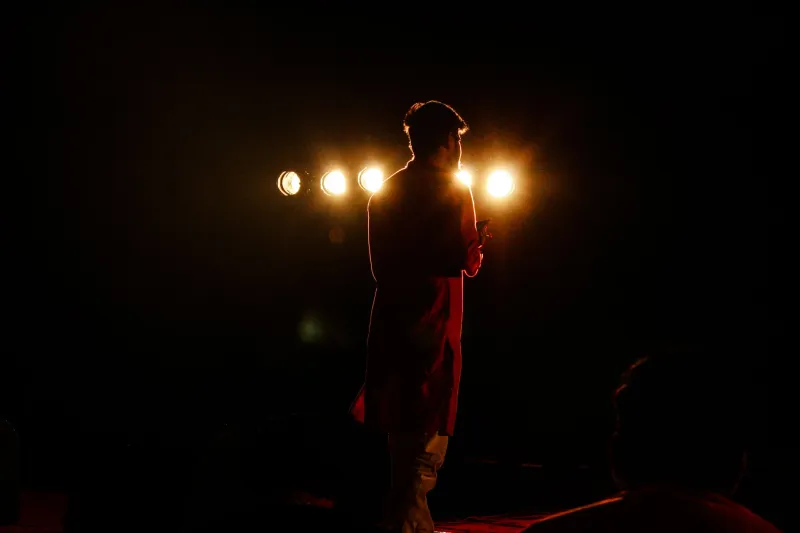
There's a moment in almost every great live performance where everything stops. The musician drops the melody down to a single sustained note. The comedian lets the punchline just hang there. The storyteller pauses right before the reveal. And the audience — that rowdy, distracted, phone-addicted crowd — holds its collective breath.
That moment? That's not empty space. That's the whole point.
We live in a content culture that rewards volume. Post more. Share more. Comment more. The algorithm, the feed, the endless scroll — it all trains creators to believe that presence means constant noise. But some of the most compelling performers I've ever watched or studied built their power not from what they said, but from what they chose to withhold.
Restraint is a skill. And most people never bother to develop it.
The Myth of the Full Plate
Here's something nobody tells you when you're starting out: audiences don't want everything you've got. Not all at once, anyway.
Think about your favorite album — the one you've listened to a hundred times. Chances are it's not the track packed wall-to-wall with production that hits the deepest. It's the one with space in it. The one where the producer had the confidence to leave a beat uncluttered, let a vocal sit alone in the mix, let silence do some of the heavy lifting.
Miles Davis understood this better than almost anyone. His whole philosophy was built around the idea that the notes you don't play matter just as much as the ones you do. That's not just jazz theory — that's a creative strategy that applies to every medium, every platform, every stage.
When you overfill a moment, you rob your audience of the chance to feel something. You're doing all the emotional work for them, and ironically, that makes the experience less impactful, not more.
Silence as a Power Move
Let's talk about this in practical terms, because "embrace the pause" can sound like vague creative advice if you don't know what it actually looks like in the real world.
On stage, silence is tension. A well-placed pause before a key line tells the audience: pay attention, something matters here. It signals confidence. It signals control. Performers who rush through their material — filling every gap, talking over their own punchlines, never letting a beat land — often do it out of anxiety. They're afraid of dead air. But dead air and intentional silence are two completely different animals.
Dead air is forgetting what comes next. Intentional silence is knowing exactly what comes next and making the audience wait for it.
That distinction is everything.
What This Looks Like Online (And Why It's Harder Than It Sounds)
Now translate that to your digital presence, because that's where most of us spend the majority of our creative energy these days.
The pressure to post constantly is real. Social media platforms are basically designed to make you feel like you're falling behind the moment you stop producing. And for a lot of creators, that pressure leads to content that's technically present but creatively hollow — filler posts, half-formed ideas, reactions to whatever's trending because at least it's something.
But here's what I've noticed: the creators who build genuine, lasting audiences aren't the ones who post the most. They're the ones who make you feel something every time they show up. And part of that is because they don't show up for everything.
When someone who rarely speaks up finally says something, you lean in. When a creator who's been quiet for two weeks drops a new piece of work, you actually notice it. Compare that to the person who posts three times a day — after a while, their content becomes wallpaper. It's there, but you've stopped seeing it.
Strategic absence creates anticipation. It signals that what you're about to share is worth waiting for.
The Blank Space Isn't Wasted Space
Visual artists figured this out centuries ago. Negative space — the empty area around a subject — isn't nothing. It's an active compositional element that shapes how the viewer experiences the whole piece. A painting crowded edge to edge with detail is exhausting to look at. One that breathes, that gives your eye somewhere to rest, pulls you in and holds you there.
Your creative output works the same way.
Whether it's the gap between album releases, the quiet before a tour announcement, the pause you build into a set, or the deliberate choice not to weigh in on every cultural conversation — blank space is part of your story. It's not absence. It's architecture.
The best brands in entertainment understand this intuitively. Think about how certain artists can drop a single cryptic image with no caption and break the internet. That's not an accident. That's the accumulated weight of strategic silence finally being released. They've been building pressure. And when they let it go, it lands.
Learning When to Hold Back
So how do you actually develop this skill? Because restraint doesn't come naturally, especially when you're hungry to be heard.
Start by auditing your output. Look at your last month of content, your recent performances, your creative projects — whatever applies to you. Ask yourself honestly: where am I filling space out of habit or anxiety rather than intention? Where am I over-explaining? Where am I rushing past the moments that could actually land?
Then start experimenting. Cut the last line of something and see if it hits harder. Leave a post in drafts for an extra day and notice whether your instinct to share was creative or reactive. Build a pause into your stage timing and watch how the room responds.
You'll feel uncomfortable at first. Silence feels like risk when you're used to constant output. But that discomfort is usually a sign you're doing something right.
The Loudest Thing in the Room
Here's the truth about attention in an oversaturated media landscape: everyone is shouting, so nobody can be heard. The way to cut through isn't to shout louder. It's to do the thing nobody else has the discipline to do — stop, breathe, and trust that what you have to say is worth the wait.
The silence between the notes isn't a gap in the music. It's the music.
And the space you leave in your work — the things you choose not to say, the moments you let breathe, the pauses you have the confidence to hold — that's often where your audience will feel you most.
Less really is louder. You just have to be willing to test it.