The Empty Room Is Where the Magic Actually Lives
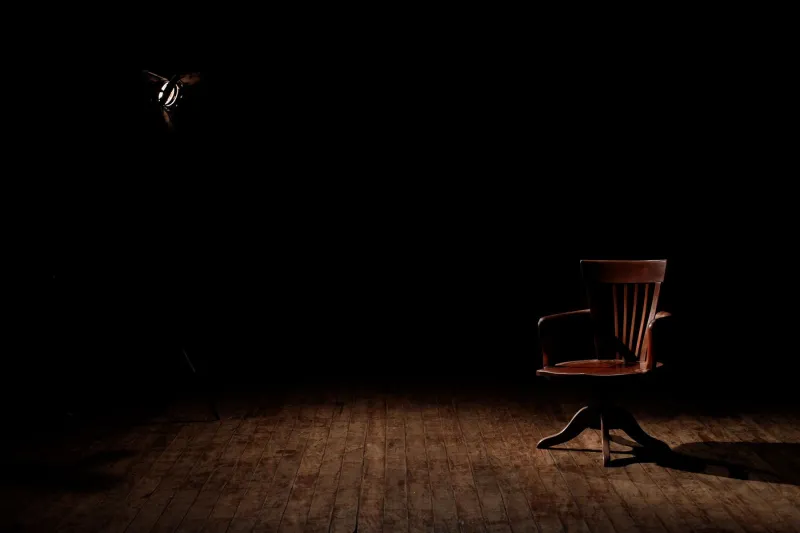
There's this moment that happens to almost every performer at some point. You're alone — maybe it's a rehearsal room, maybe it's your living room at midnight, maybe it's the shower if we're being honest — and something comes out of you that stops you cold. A line reading you didn't plan. A riff that lands somewhere unexpected. A version of yourself you didn't know existed.
And then you think: Why can't I do that when it counts?
Here's the thing nobody really talks about in the entertainment industry. The spotlight, for all its glamour, is also a cage. The moment you become aware that people are watching, something subtle but significant shifts inside you. You start performing at your audience instead of for yourself. And that tiny distinction is the difference between work that moves people and work that just occupies space.
Pressure Is a Creativity Killer (Most of the Time)
We've been sold this story that pressure produces diamonds. And sure, sometimes it does. Deadlines get met. Performances get delivered. But there's a category of creative output — the really transcendent stuff — that pressure almost always kills before it can breathe.
Think about some of the most celebrated creative breakthroughs in American entertainment. Prince recording entire albums alone in his basement studio at Paisley Park. Springsteen writing Nebraska on a handheld tape recorder in a hotel room, with zero intention of it becoming anything official. Lucille Ball reportedly rehearsing physical comedy bits in her kitchen until her husband told her she was losing her mind.
None of those moments happened under a spotlight. They happened in the dark, where nobody was grading the work.
When you're performing for an audience — a real one, or even an imagined one — part of your brain is always running a background program. Is this landing? Are they with me? Am I too much? Not enough? That program is useful for a lot of things, but it's a disaster for genuine creative exploration. It prunes the weird branches before they can grow into something interesting.
The Audience of One
Here's a reframe that changed how I think about creative work: the most important performance you'll ever give is the one you give for yourself.
Not in a navel-gazing way. Not as an excuse to ignore your audience or stop developing your craft in a public-facing direction. But in the sense that if you can't fully commit to something when you're alone with it, you'll never fully commit to it in front of a crowd either. Audiences can smell held-back energy. They don't always know what they're sensing, but they feel it — that slight hesitation, that protective layer between you and the material.
The performers who tend to have the longest, most resonant careers aren't necessarily the most technically polished. They're the ones who figured out how to stay open — and staying open requires a private creative practice where you're allowed to be bad, weird, uncertain, and genuinely surprised by yourself.
That only happens when you stop performing for approval and start performing for discovery.
Why Isolation Breeds Breakthrough
There's actual psychology behind this. Research on creative flow states consistently shows that self-consciousness is one of the primary barriers to entering deep creative work. When we're observed — or even when we think we might be observed — we shift into a more evaluative, self-monitoring mode. Great for editing. Terrible for generating.
This is why so many artists, musicians, comedians, and actors describe their private rehearsal process almost like a different discipline from their public performance. It's not just preparation. It's a separate creative act entirely.
Comedians will often tell you that the jokes that end up killing in a set were born out of something they were just messing around with — not crafting, not workshopping, just playing. Actors talk about finding a character in their apartment before they bring them into a rehearsal room. Musicians describe the song that wrote itself at 3 a.m. differently than the one they sat down to write on purpose.
The common thread is permission. Permission to not know what you're doing. Permission to follow something instinctive without justifying it to anyone.
Making the Private Work Feed the Public Work
So how do you actually use this? Because the goal isn't to become a hermit who makes beautiful work that nobody ever sees. The goal is to let your private creative life inform and deepen what you bring to a public stage.
A few things that help:
Give yourself unstructured creative time on a regular basis. Not practice time. Not prep time. Time where there's no goal except to see what shows up. Fifteen minutes a day of this does more for your creative range than two hours of drilling the same material.
Record yourself when you're not trying. Not for content, not for an audience — just to catch the accidents. Some of the most interesting choices performers ever make happen when they're not paying attention. You want a way to retrieve those.
Lower the stakes in private so you can raise them in public. If every solo session feels like an audition, you're not giving yourself room to fail. And failing privately — spectacularly, freely, without consequence — is exactly how you find the edges of what you're capable of.
Notice when you're performing for an imaginary audience. This one's sneaky. Sometimes even in private, we're running an internal audience in our heads — imagining how a mentor would react, or a critic, or an ex. That's still performing for approval. When you catch yourself doing it, try to gently redirect toward curiosity instead.
The Paradox That Actually Works
Here's the strange loop at the center of all of this: the less you need your audience's approval in the moment you're creating, the more powerfully your work tends to connect with them eventually.
Authenticity isn't a style. It's not a vibe you can manufacture. It's what's left when you strip away the performance of performing. Audiences — especially American audiences who've been marketed to their entire lives — have a finely tuned radar for the real thing. When something genuine comes through, they don't just like it. They feel it.
And that feeling almost always started in an empty room.
So yeah, chase the big stages. Build the audience. Develop the craft in public. All of that matters. But don't neglect the work that happens when nobody's watching. That's not the rehearsal for your career. For a lot of performers, it is the career — the root system that feeds everything visible above ground.
The spotlight is where you deliver. The empty room is where you discover.
Figure out which one you've been neglecting.