You're Not a Fraud — But Your Brain Really Wants You to Think You Are
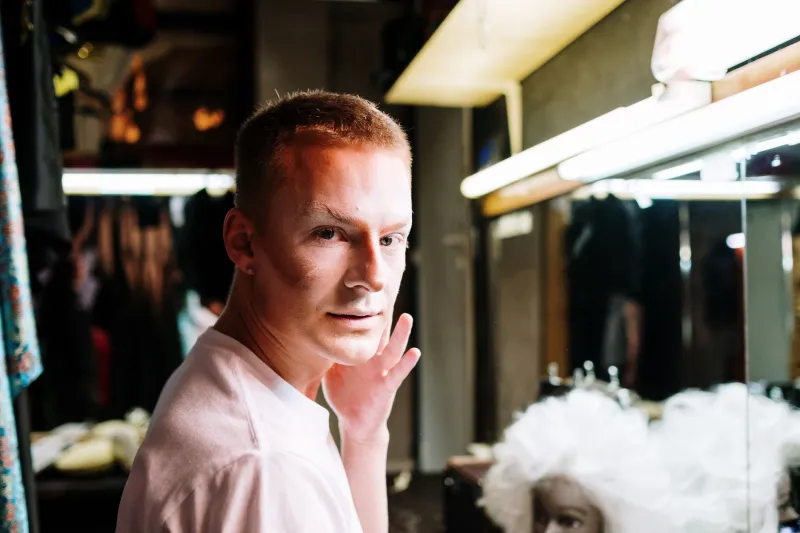
There's a moment that happens backstage — and I mean backstage, not in any interview or highlight reel — where even the most polished performer goes quiet in a way that has nothing to do with focus. It's not meditation. It's not pre-show ritual. It's that cold, creeping whisper that says: You don't actually belong here.
If you've felt it, you already know exactly what I'm talking about. If you haven't, either you're brand new to this or you've gotten extremely good at ignoring it. Either way, we should talk.
Imposter syndrome in creative performance is one of those things everybody experiences and almost nobody discusses honestly. We talk about stage fright. We talk about nerves. But the imposter thing runs deeper than butterflies — it's a full-blown identity crisis dressed up in stage clothes, and it doesn't care how many shows you've done or how long your résumé is.
The Dirty Secret About Experience
Here's the part that catches most people off guard: this doesn't go away when you get better. If anything, it shapeshifts.
When you're just starting out, imposter syndrome sounds like I'm not good enough yet. That's almost logical — you're learning, you're growing, the gap between your taste and your ability is real. But then you put in the work. You get better. You book the gig, you earn the room, you get the standing ovation. And instead of silence, the voice just... upgrades its argument.
Now it sounds like You got lucky. They'll figure it out eventually. That last show was a fluke.
It's a moving target. The more evidence you stack up against it, the more creative it gets at dismissing that evidence. Psychologists have a name for this cognitive pattern — it's essentially a confirmation bias loop where your brain cherry-picks every stumble and discards every win. Knowing that doesn't make it stop, but it does help you stop taking it so personally.
The Gap Between the Stage and the Mirror
One of the strangest things about being a performer is that you're trained — sometimes professionally, sometimes just through survival — to project confidence you don't always feel. That's not dishonesty. That's craft. The ability to hold a room even when you're not entirely sure of yourself is a legitimate skill.
But here's where it gets complicated: the wider that gap grows between your public persona and your private reality, the louder the imposter voice tends to get. You're performing confidence while privately cataloging every reason you shouldn't be confident, and that cognitive dissonance is exhausting in a way that's hard to explain to people outside this world.
The fix isn't to perform less confidence. It's to close the gap from the other direction — by being more honest with yourself (and maybe a few trusted people) about the private struggle.
That means actually saying out loud, I felt like a fraud up there tonight, instead of burying it under a post-show drink and a highlight reel Instagram story. It means finding at least one or two people in your circle — a collaborator, a mentor, a creative peer — who you can be genuinely unfiltered with. Not to wallow. Just to be real.
Reframing Without the Toxic Positivity
Let me be clear: I'm not here to tell you to just believe in yourself or own your power or whatever motivational poster language is trending this week. That stuff isn't useless, but it tends to bounce right off imposter syndrome because the feeling isn't rational — so rational counter-arguments don't land.
What actually helps is reframing, which is different from positive thinking. Reframing doesn't pretend the doubt isn't there. It just questions whether the doubt is telling you the truth.
Try this: instead of arguing with the imposter voice (No, I do belong here, I've worked hard, I have credits—), get curious about it. Ask it: What specifically are you worried about? More often than not, it'll point to something real — a skill gap, a relationship in your career that feels shaky, a creative direction you're not fully committed to. That's useful information. That's something you can actually work on.
The voice isn't always wrong. Sometimes it's pointing at a genuine weak spot. The problem is when it generalizes from I need to work on this one thing to I am fundamentally a fraud who shouldn't be here at all. That leap is the lie.
Permission to Struggle — Without Using It as an Excuse
There's a balance here that's worth naming directly, because creative communities can sometimes swing hard in either direction.
One camp says: push through, stop being precious, nobody cares about your feelings, get on stage and do the work. There's real value in that. Discipline matters. Showing up matters. You can't wait until you feel worthy before you perform — that day might never come.
The other camp says: honor your feelings, give yourself grace, you're enough as you are. Also valuable. Compassion for yourself is not weakness.
The truth lives somewhere in the middle. You can give yourself full permission to struggle and still show up. You can acknowledge the doubt and not let it make your decisions. Struggling doesn't disqualify you. Using the struggle as a permanent exit ramp from the hard work — that's where it becomes a problem.
The most resilient performers I've seen aren't the ones who never feel like frauds. They're the ones who feel it, name it, and walk out on stage anyway.
What You Actually Owe Yourself
At the end of the day, creative performance is a weird, vulnerable, deeply human thing to do. You're putting something you made — or something you are — in front of strangers and asking them to feel something. Of course that comes with doubt. Of course your brain tries to protect you by questioning whether you're qualified.
But here's what I keep coming back to: the people in that audience aren't there to catch you being a fraud. They're there because they want to be moved, entertained, surprised, seen. They're rooting for you before you even open your mouth.
You don't have to earn the right to be on stage by eliminating every trace of self-doubt. You just have to show up and do the work honestly.
The imposter voice will probably always be there, at least a little. But it doesn't have to have the mic.